
July 2014
Backyard Massacre: Death by Roundup/Glyphosphate
Article, art, and videos by Joules, a wildlife expert with bird rehabilitation experience, degreed in Wildlife Biology B.S.
see the video about this article here:
youtube Channel: Joules Craft: http://youtu.be/2MQXYnVsQ3Q
or on Vimeo channel Biodiversity City: http://vimeo.com/101049299

It was a simmering summer morning in the midst of drought season in desiccated Colorado. A friend requested a ride to a suburb of Denver in my sweltering car. Upon arrival, in the center of a suburban lawn, a sapling stood, surrounded by a manicured lawn resembling astroturf. A dog barked in the distance behind a nearby status symbol property as mowers furiously buzzed to compete to create illusions of control over nature.
There in their new cemetery were five, tiny, black and white islands in a sea of green. Dead fledgling magpies still physically unable to fly lay upon the grass with intact bodies and feathers.
Oh my goodness! Did they drop dead out of a nest? Were they attacked, did they starve, dehydrate, or were their parents killed and unable to care for them? How could they all die at the same time?
As a volunteer/future employee at a wild bird rehabilitation facility, I knew an autopsy was in order.
The species Black-billed Magpie (Pica hudsonia) of the Corvid family, grows about crow size, has distinct black and white feathers with long tails that provide grace and balance during flight and are typically a more hardy bird than other delicate song birds. But these five young birds will never fly. Fledgling magpies drop from the nest and run around on the ground for a spell under supervision from both parents. The question is, how did an entire clutch of offspring perish?
At the time of my macabre discovery, I was working at Wild B.I.R.D. Information and Rehabilitation of Denver center, which aides in the collection of deceased birds for studies conducted by the Museum of Nature and Science. Both institutions have investigative methods to determine causes of death. Zoology collections manager of the museum, Jeff Stephenson collects species for scientific and educational purposes including: tissue samples, organs, exo & endo-parasites, skeletons, and more to preserve specimens for more than 3000 years. He commented, “I think I share the view with everyone in the museum to rather see them alive in the wild and thriving.”
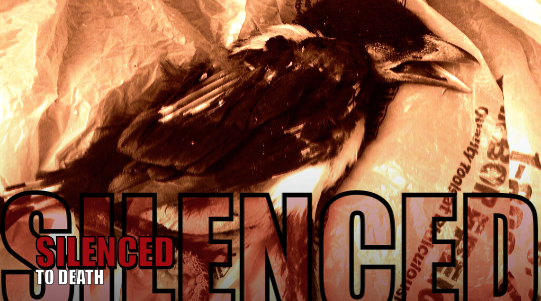
photo by the author
At first glance, I speculated that maybe the birds dehydrated to death as lawn watering restrictions were in place. Perhaps the parents suffered an unforeseen tragedy, like a car or lightning strike, so they couldn’t feed their hungry babies. I examined the stiff bodies, seeking blood, contusions, bruises, fractures, cat or dog bites—still nothing!
Eventually, we laid several birds on the operating table. Their skin was supple instead of wrinkly and stretchy, suggesting they had plenty to drink, ruling out dehydration.
Snip…snip…the surgical scissors, severed the skin along the center of each body. Cutting into their slimy stomachs could’ve made a sensitive person’s own stomach spill out onto the floor. The stomachs were full of food, proving the magpie parents had done their job.
With organs intact and disease tests passed, we made our way to their livers, which had tar like stripes, instead of healthy reddish pink. We knew then that poison was the cause of death.
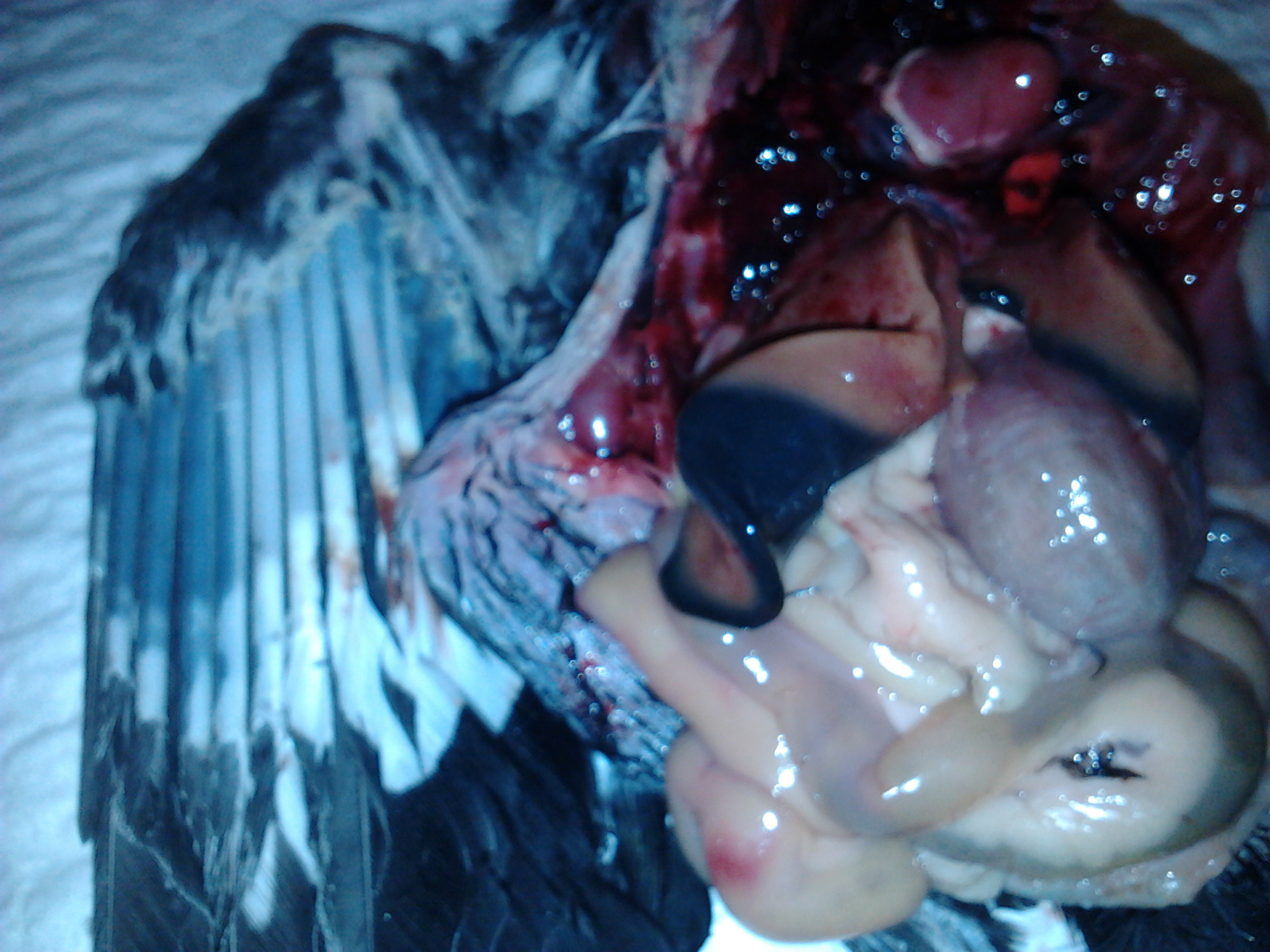
unedited photo by the author
(the blackish deli meat-like tainted flap in the exact center of this photo is the birds’ poisoned liver)
The next day, I returned to the scene of the crime. Two more casualties lay lifeless, further frustrating the mystery. The Sherlock Holmes in me investigated.
Lo and behold, a large bottle of Monsanto’s Roundup weed killer stood beside the garage like a murderer still hanging out at the scene of the crime. Beside the poison was a dog’s water dish half empty of water with a dirty rag floating in it. This was the only water source on the property. Someone must’ve wiped their toxic hands on the rag that fell into the dish and contaminated the water that the yet flightless magpies drank! Unintentional accidents happen.
At the Wild B.I.R.D., licensed wildlife rehabilitator Morgan Sandoval contributed her thoughts about pesticide use, “I think it’s unnecessary. There are plenty of alternatives they could use to effect weeds and pests without harming wildlife.” She shared an example of using dried mashed potato bits to get rid of ants, so ant eating woodpeckers like Flickers (Colaptes auratus) are not harmed after consuming poisoned ants. Dozens of biodegradable safer alternatives to the commercial poisons exist. These include vinegar, fire, dish soap, and salt sprinkled directly on an individual plant. Click here to see how to make them.
In the United States, wildlife species have federal laws to protect them, such as The Migratory Bird Act, which makes it illegal to “pursue, hunt, take, capture, kill, attempt to take, capture or kill, possess, offer for sale, sell, offer to purchase, purchase, transport, in any manner, any migratory bird.” At Wild B.IR.D. intake coordinator Mary Lueb stated, “an average of three birds per week enter the center due to poison.” So, within a year in one small city, that’s 144. Out of the 293 cities in the U.S., that would be 42,192 birds per year in the U.S., a gross underestimate if they were actually brought into wildlife rehabilitation centers.
Birds and other non-target species die from consuming water tainted with Roundup. This poison is sprayed upon millions of acres throughout America’s agricultural regions on RoundUp-Ready GMO crops that are pesticide dependent, contaminating everything downstream. Most GMO’s are Roundup Ready, that makes these crops pesticide dependent. This poison is massively destroying our supposedly “protected” wildlife. Here is the proof I found right here in Denver.
Currently, two thirds (⅔) of U.S. agricultural land is used to grow feed for livestock, so such food never reaches our food stores and restaurants to allow us to choose organic. Without a doubt, it is destroying our wildlife. It’s contributing to the worldwide amphibian crisis, as the poison directly kills sensitive species as the poison floods downstream. Birds and amphibians feed on insects, so we are destroying our natural allies as well.
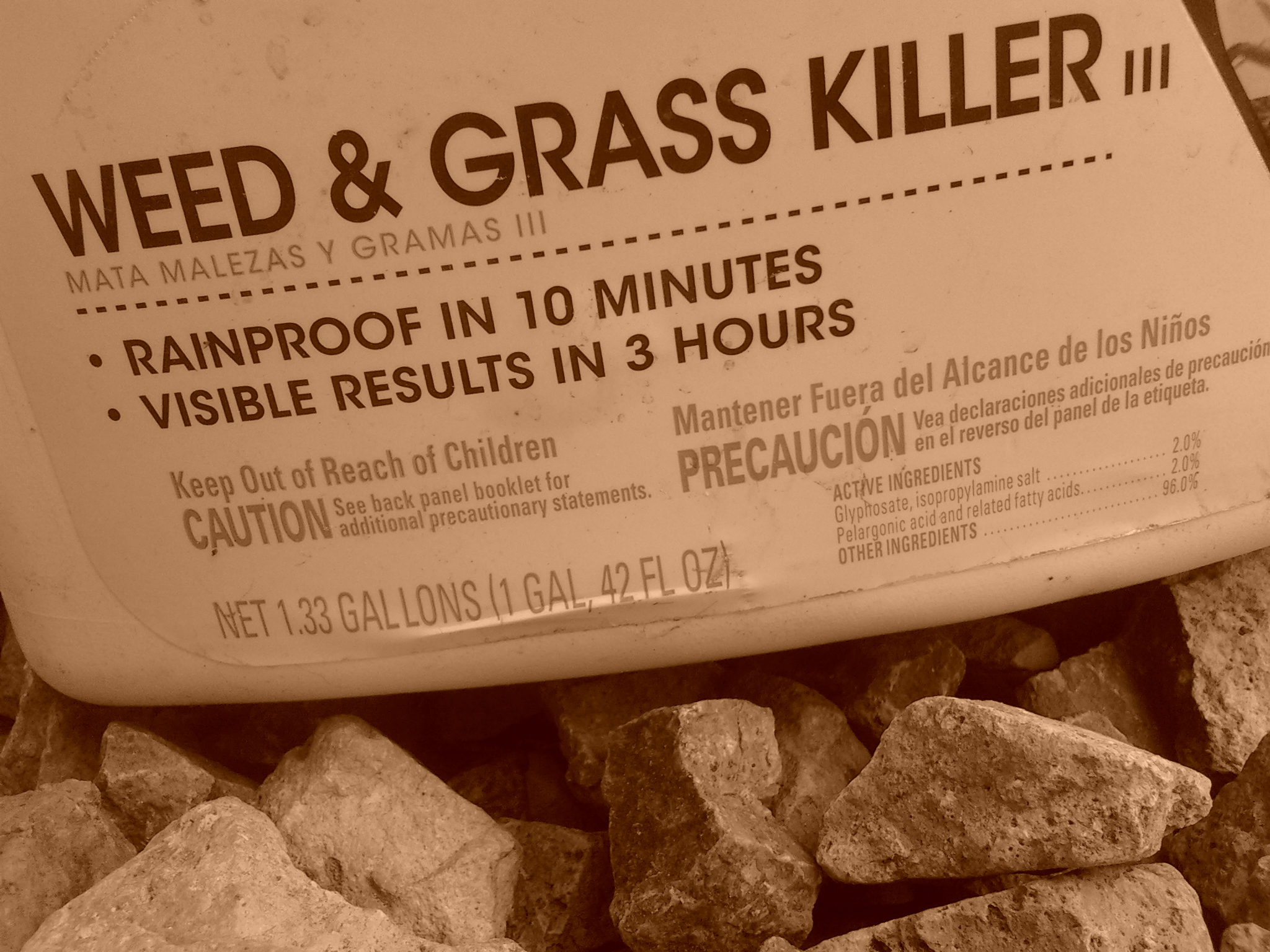
photo by the author
This product should be illegal, as it is in many countries. I hope and act upon this data to spur environmental lawyers to continue action against Monsanto, the monster manufacturer of Roundup’s active ingredient, glyphosate. According to Scientific American, glyphosate has been proven to kill human cells.
Though these baby birds never had a chance to fly, their story can create wings for action.
You too can act now and write your Congress person. Here’s a simple way to find and contact all of them: http://www.contactingthecongress.org/
You can also, support Wild B.I.R.D. in their efforts to give birds a second chance to be released back into the wild to be free. Most of the birds come in sick or injured due to human causes like pet attacks, poison, construction, tree trimming during nesting season, window and car collisions… It’s our turn we give back what humans have taken away from them. This necessary and vital nonprofit resource we depend on currently hangs in dire limbo by tooth and nail. They plan on closing and may be forced to euthanize every bird in their care unless we help in any way we can imagine. If you or anyone you know can help sponsor, donate, or create an event, PLEASE go to:wildbirdrehab.com and/or email info@wildbirdrehab.com
Or please visit: https://www.indiegogo.com/projects/wild-b-i-r-d-needs-a-new-nest

 Joules Craft